
The Moment Digital Identity Became Geopolitics
At MOSIP Connect 2026 in Morocco, the conversation about decentralised identity shifted in a way that the technology industry cannot afford to ignore. The dominant theme was not technical architecture or user experience. It was sovereignty.
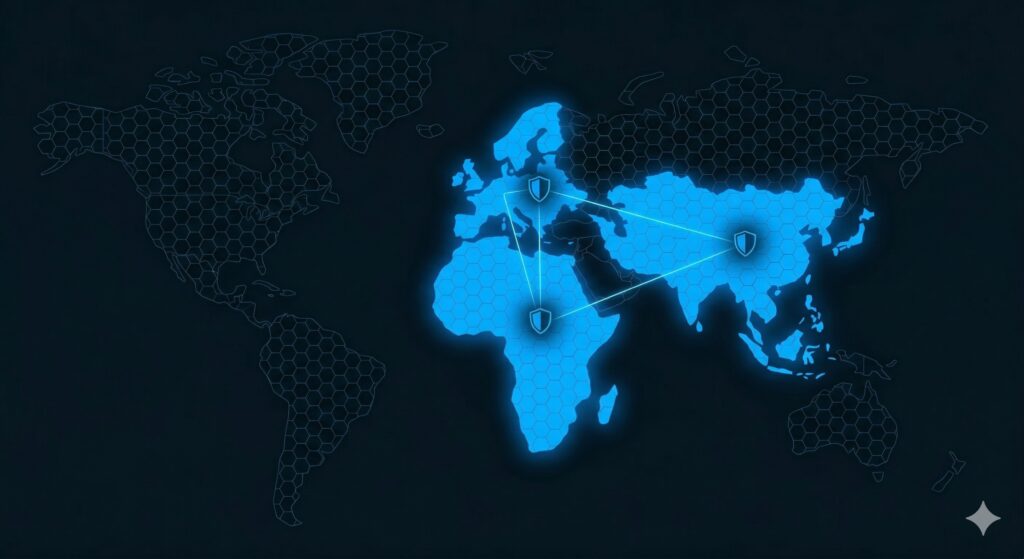
The European Union confirmed that its eIDAS 2.0 digital identity wallets remain on track for citizen rollout by late 2026. When that happens, more than 450 million Europeans will have access to government-backed digital credentials that support selective disclosure, portable verification, and user-controlled data sharing. A French citizen will be able to prove their age to an online service without revealing their date of birth. A German professional will be able to verify a qualification without handing over their entire employment history.
Meanwhile, the United States is actively resisting data sovereignty frameworks in international trade negotiations. Countries across Africa, Asia, and Latin America are charting their own paths, many through the open-source MOSIP platform that now underpins national identity systems in multiple countries.
Digital identity is no longer a technical problem waiting for a solution. It is a geopolitical arena where competing visions of data ownership, citizen rights, and institutional trust are playing out at continental scale.
What eIDAS 2.0 Gets Right
The eIDAS 2.0 framework represents the most ambitious government-led digital identity initiative in history. Its core principles will be recognisable to anyone who has followed the decentralised identity movement.
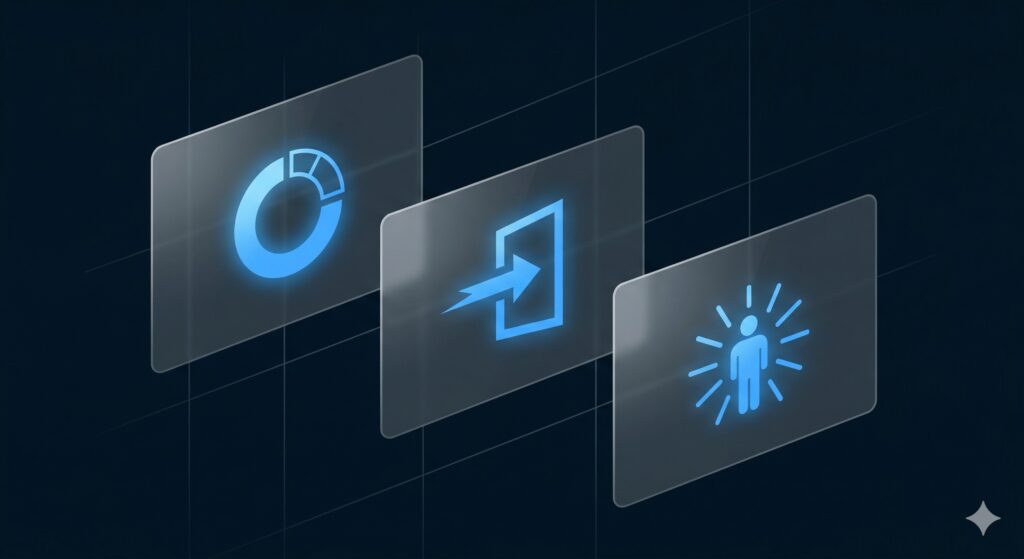
Selective disclosure allows users to share only the specific attributes needed for a given interaction. This is a fundamental privacy protection that prevents the over-collection of personal data that has defined the internet era.
Portable credentials mean that identity verification issued in one context can be used in another, reducing the need to repeatedly prove the same information to different services.
User control places the individual, not the issuing institution, at the centre of decisions about when and how their data is shared.
These are not new ideas. They are the foundational principles that projects like Ontology ( have been building into blockchain-based identity infrastructure for years. ONT ID, Ontology’s decentralised identity framework, was designed from the outset to support verifiable credentials, selective disclosure, and user-sovereign data management.
The significance of eIDAS 2.0 is not that it introduces these concepts. It is that a major government bloc has now validated them as the standard for how digital identity should work.
The Gap Government Wallets Leave for Decentralised Identity
For all its ambition, eIDAS 2.0 has structural limitations that open a clear role for decentralised identity infrastructure.
Jurisdiction boundaries. eIDAS 2.0 is an EU framework. It is designed to work within the European regulatory environment. But identity does not stop at borders. A European professional working with partners in Singapore, a supply chain spanning four continents, a content creator licensing work globally: these scenarios require identity infrastructure that operates across jurisdictions, not within them.
Institutional dependency. Government-backed wallets rely on government institutions as the trust anchor. This works well within stable governance frameworks. But for the billions of people who lack reliable government-issued documentation, or who live in contexts where institutional trust is fragile, a purely government-dependent model leaves significant gaps.
Web3 and DeFi integration. The eIDAS 2.0 framework is designed for traditional digital services. It does not natively address the identity requirements of decentralised finance, on-chain governance, AI consent frameworks, or cross-chain applications. These environments need identity verification that is programmable, composable, and chain-agnostic.
This is not a criticism of eIDAS 2.0. It is a recognition that government identity wallets and decentralised identity protocols serve different layers of the same stack. The question is not which approach wins. It is how they connect.
Ontology as the Interoperability Layer
Ontology’s identity infrastructure was built for precisely this kind of convergence.
ONT ID operates as a protocol-level identity framework that can interface with institutional credential systems while maintaining the decentralised, user-sovereign properties that Web3 requires. It supports verifiable credentials that are interoperable across chains, composable within smart contracts, and compatible with emerging standards for decentralised identifiers.
In practical terms, this means a credential issued through a government framework like eIDAS 2.0 could be bridged into a decentralised application through Ontology’s identity stack. A user could verify their EU-issued professional qualification to access a DeFi protocol, participate in on-chain governance, or provide consent for AI training data, all without exposing the underlying personal data to any single intermediary.
ONTO Wallet extends this capability to the user layer. As Ontology’s multi-chain wallet, ONTO is evolving into a verified human data layer: a place where users manage not just tokens and assets, but their identity credentials, consent records, and data permissions across chains and applications.
Ontology’s 2026 roadmap targets this convergence directly, with development priorities focused on universal data sovereignty and human-centric AI. The thesis is straightforward: as governments build the credential issuance layer, decentralised infrastructure must build the interoperability, composability, and user-control layer that connects these systems across borders and platforms.
The Opportunity Ahead
The eIDAS 2.0 rollout marks a turning point. For the first time, a major institutional actor has committed to identity principles that align with the decentralised identity movement. This creates an opportunity that did not exist even a year ago.
Government wallets will drive mass adoption of digital credential concepts. Hundreds of millions of people will become familiar with selective disclosure, portable verification, and data minimisation. That is an enormous base of users who will increasingly expect these capabilities everywhere, not just within EU-regulated services.
The projects that will benefit most from this shift are those that have been building interoperable, cross-chain identity infrastructure designed to work with institutional systems rather than against them. Ontology’s focus on bridging institutional and decentralised identity positions it at the centre of this convergence.
Digital sovereignty is no longer an aspiration. It is becoming infrastructure. The question now is who builds the connections between these emerging systems. That is the work Ontology is doing.
